Amateur Radio DXing - the key elements
Explore the exciting world of amateur radio DXing and find out what makes this such an addictive side of the hobby, encompassing many skils and interests.
What is Amateur Radio includes:
What is Amateur Radio
HF DXing
Portable operation
Operating POTA
Building your equipment
There is an unmistakable thrill about hearing and then contacting stations from distant locations, possibly on the other side oft he globe.
I can still remember some of the contacts I made many years ago when I first obtained my licence - from the UK to the far side of the USA and many other stations even further away.
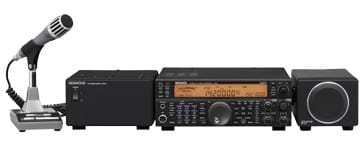
And having put the station together and also erected the antenna, there was a real sense of achievement.
In fact DXing is a particularly popular aspect of the hobby of amateur radio, with many people being really interested in making contacts all around the globe.
In the context of amateur radio, "DX" is telegraphic shorthand for "distance." On the High Frequency (HF) bands, DX typically refers to a contact with a station that is a long distance away, and often it means in another continent.
It is the art of using the Earth’s ionosphere as a "mirror" to bounce signals halfway around the planet, sometimes using less power than a standard lightbulb.
For those who catch "DX fever," the pursuit is more than just a technical exercise; it is a high-stakes combination of geography, atmospheric physics, and extreme patience.
The Magic of the HF Bands
Whatever the science behind it, and there is a lot, it has got to be said that there is a certain magic in using the HF bands, their unpredictability (to a degree) and the chance of hearing a weak station fading in and out of the noise and then being able to make contact.
I can still remember getting up early one morning shortly after I was first licenced and managing to contact stations in Montana and California and 20 metres with an AM / CW rig I had managed to buy. It was really exciting!
Even today, the HF spectrum, spanning from 3 MHz to 30 MHz, is the primary playground for the DXer. Unlike VHF or UHF signals, which generally pass through the atmosphere into space, HF signals have the unique ability to reflect off layers of ionized gas in the upper atmosphere.
This enables signals on the HF bands to travel many thousands of miles and sometimes even to the other side of the world and possibly beyond! (Dependent upon the propagation, they may reach a distant station by what is called the long path, by going round the globe to the other side and bit beyond).
Each band within the HF spectrum has its own "personality" and optimal time for DXing:
160, 80, and 40 Metres (The Low Bands): These are predominantly for "night owls." During the day, the D-layer of the ionosphere absorbs these signals, but at night, they can travel thousands of miles. 40m is often the most reliable band for intercontinental DX during the darker hours.
20 Metres: Widely considered the "King of DX." It is open to some part of the world almost 24 hours a day and is the most common place to find rare foreign stations.
15, 12, and 10 Metres: These bands are highly dependent on the solar cycle. When sunspot activity is high, these bands "open up" with incredible efficiency, allowing for worldwide contacts with very low power and modest antennas.
Understanding radio propagation: the secret to successful DXing
Having a good understanding of ionospheric radio propagation is a key skill for any one using the HF bands, and in particular it is really important for anyone taking DXing seriously.
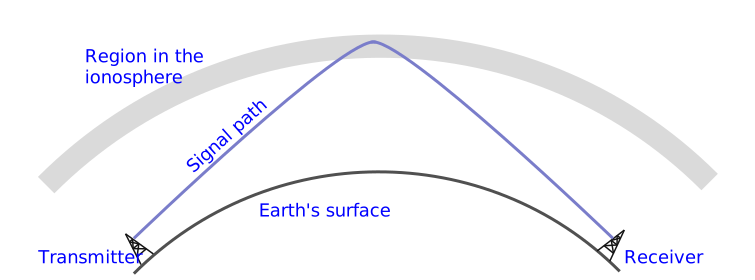
Notice how the signal is refracted as it enters the ionospheric layer
Using this form of radio propagation, the signals being transmitted travel from the transmitter and can be reflected back from one of the ionised regions in the ionosphere which exist between about 60 to 400 km above the surface of the Earth.
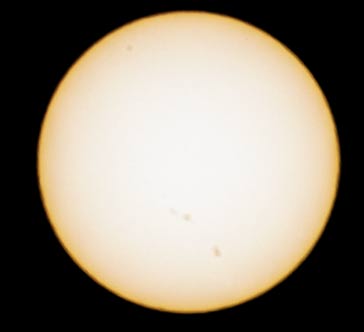
As the ionisation in the ionosphere chiefly results from radiation from the Sun, it is found that the ionosphere and hence radio propagation relates closely to the state of the Sun as well as some other factors.
Note on Ionospheric propagation:
The ionosphere exists in the upper reaches of the atmosphere extending to altitudes of 400 km or more. The different regions of the ionosphere can affect radio signals refracting them so that they return to Earth. In this way, signals can be heard at distances ranging from a few hundred kilometres to the other side of the globe.
Read more about Ionospheric propagation
The equipment
Some people may feel they need to buy a lot of really expensive equipment if they are to be able to be successful and enjoy HF DXing.
While good equipment and antennas certainly help, it is surprising how much can be done with what may be termed a modest station.
But what sort of equipment might be needed:
The Transceiver: Modern SDR (Software Defined Radio) rigs have revolutionized DXing. Features like high-resolution "waterfall" displays allow you to see a DX station appearing in the noise before you even hear them.
The Antenna: While a simple wire dipole can work the world when the sun is active, many serious DXers use Yagi antennas. These directional "beams" focus your signal in a specific direction, significantly increasing your effective radiated power.
Morse Key: While SSB (voice) is very popular, Morse Code (CW) remains the "gold standard" for DXing because you can achieve far more with a modest station than when using SSB, or at least that was my experience. CW can be heard when voice signals are completely lost in the static, and it remains the most effective way to snag a rare station in difficult conditions.
I thought you might like to see these . . . . . .
This equipment has been selected for your interest and it is available via AliExpress. Alternatively check out my Amazon .com Storefront.

Xiegu G90 0.5-30MHz HF Amateur Radio 20W SSB/CW/AM/FM SDR
G90 is a portable 20W HF amateur radio transceiver with an SDR architecture with built-in auto antenna tuner. The display unit and the radio can be separated. It is a new member of the Xiegu product family.

uSDR uSDX+ V2 SDR HF 8 Bands All Mode High Frequency Transceiver
This is a full mode shortwave QRP SSB/CW transceiver. Ultra-small size design makes it easy to carry and use. It has a 1602N LCD screen and a built-in speaker to ensure superior performance. It supports connection to a PC and uses FT8, JS8, FT4 and other digital mode software control, and supports CW automatic decoding.

Xiegu VK-6 Iambic Paddle Morse Key 3.5mm Interface
This key will interface with most transceivers to enable the iambic keying to be achieved. Weighing 537g it is ideal for portable use.

HF End Fed Wire Antenna 1‑30MHz
This end fed wire antenna uses a 1:49 balun to provide a good match. Aimed at used on the 40m, 20m, 15m, 10m, it should provide an SWR ≤ 1,5:1. Intended for low power use.
Check out more items you might like from my HF amateur radio equipment.
More convenient to buy from Amazon.com? Check out Antennas and Amateur Radio Equipment on my Amazon Storefront.
Note: We make a small commission from any sales at no cost to you.
What is a pile-up
When a rare station — perhaps a "DXpedition" to an uninhabited rock in the South Atlantic—comes on the air, hundreds of operators from around the world will try to contact them at once.
This creates a wall of sound known as a pile-up - operating and getting through these pileups requires a variety of skills beyond just having a loud station.
Listening: A good DXer spends more than 90% of their time listening and less than 10% transmitting. They study the "rhythm" of the DX station.
Split Operation: Rare stations often transmit on one frequency and listen on another (e.g., "Up 5"). Navigating this requires a deep understanding of your transceiver's VFOs.
Timing: Knowing exactly when to drop your callsign into a gap in the noise is an art form. It’s about finesse, not just "brute force" power.
Proving the Contact: QSL Cards
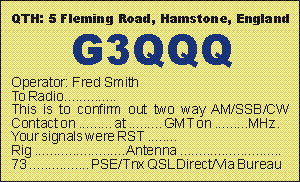
In the early days of radio, operators would send postcards to each other to verify that a contact had actually taken place. Over a century later, the QSL Card remains the "final courtesy" of a DX contact.
These physical cards are often beautiful, featuring photos of the operator's home country, their station, or local landmarks. For many hams, receiving a "rare" card in the mail from a place like North Korea, Mount Athos, or the Revillagigedo Islands is a moment of pure triumph.
While physical cards are still cherished, modern DXing has embraced the digital age. Systems like Logbook of The World (LoTW) and eQSL allow for near-instant electronic verification of contacts. These digital "credits" are essential for those pursuing the many amateur radio awards available to the community—a topic we cover in detail elsewhere on this site.
Why We Do It: The Global Community
Beyond the technical challenges and the scientific intrigue, DXing is fundamentally about human connection.
When you sit in your shack at 3:00 AM, sipping coffee and squinting at a waterfall display, you aren't just looking for a signal. You are looking for a person.
You might spend five minutes talking to an engineer in Tokyo, a teacher in Italy, or a researcher in Antarctica.
In a world that is increasingly connected by the internet, there is something deeply authentic about a communication that relies on nothing but a radio, an antenna, and the natural state of the atmosphere.
No fibre optics, no satellites, no corporate servers—just two people, two radios, and the magic of the ionosphere.
DXing is the ultimate "long game" of amateur radio. It rewards those who take the time to learn the science of propagation, the nuances of their equipment, and the discipline of elite operating.
Whether you are aiming for your first 100 countries to qualify for a prestigious award or you are simply looking for the thrill of hearing your callsign returned from across the globe, the HF bands offer an adventure that never truly ends.
 Written by Ian Poole .
Experienced electronics engineer and author.
More Ham Radio Topics:
What is ham radio
Callsigns
Morse code
Voice modes
Digital data modes
QRP operating
Operating awards
Codes & abbreviations
Ham bands overview
Operating via differnet propagation modes
Repeaters
Callsigns
Contact formats
Setting up a shack & buying equipment
Return to Ham radio menu . . .