The 1960s Offshore Pirate Radio Broadcasting Phenomenon: Radio Caroline & Others
Explore the 1960s medium waveband offshore pirate radio broadcast revolution - discover how stations like Radio Caroline aboard ships, etc, brought pop music to millions and changed radio forever.
Broadcasting History Includes:
Broadcasting history & legacy
Pirate radio broadcasting & Radio Caroline
In the early spring of 1964, a former passenger ferry named the MV Fredericia dropped anchor in international waters three miles off the coast of Felixstowe, Suffolk, UK.
On Easter Sunday,29th March, a crisp voice cut through the static on 199 metres medium wave saying: "This is Radio Caroline on 199, your all-day music station.".
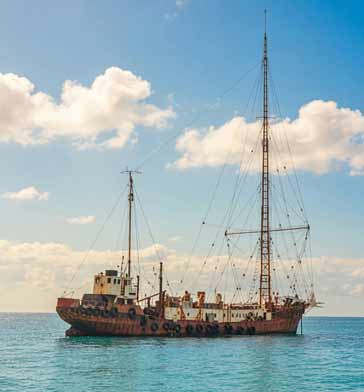
With those words, a cultural revolution erupted. For the next three and a half years, a fleet of rusty motorships, decommissioned light vessels, and even abandoned wartime forts besieged the medium waveband around the United Kingdom.
Operating just beyond the reach of national jurisdiction, these "pirate" radio stations broke the state broadcasting monopoly, transformed pop culture, and fundamentally altered the relationship between youth culture and the airwaves.
Monochrome monopoly
To understand why offshore radio exploded so dramatically in 1960s Britain, one must understand the broadcasting landscape of the time.
The British Broadcasting Corporation, BBC held a strict statutory monopoly on radio. While its programming was revered for its high quality in news and spoken-word radio, its musical output was heavily restricted.
The BBC operated three main national networks at the time: the Light Programme, the Third Programme, and the Home Service. Popular music was severely restricted by "needle time" - a regulatory cap negotiated with the Musicians' Union and record labels that strictly limited the number of hours of commercially recorded music that could be played on air each week.
In the early 1960s, despite the meteoric rise of 'pop' music with The Beatles, The Rolling Stones, and the Merseybeat movement, the BBC played only a few hours of pop music per week.
I, myself, can remember having to wait for the very few programmes that carried any form of popular music.
Teenagers seeking the latest hits had to wait until evening to tune into the fading signal of Radio Luxembourg, a commercial station broadcasting on 208 metres in the medium wave from continental Europe. But it was necessary to wait until the evening when the radio propagation skip enabled the large transitters and antennas of Radio Luxembourg to reach the UK.
The appetite for pop music was astronomical, but the legal supply was practically non-existent.
The Birth of the 'Pirates'
The demand for popular music had grown steadily over the years as young people had more money and influence and wanted their own music, and the BBC was just not meeting this need.
The answer was to find a way of bypassing the strict UK regulation, and broadcasting offshore was it.
The idea of bypassing government regulation by anchoring a transmitter in international waters was not entirely new, but its application to British pop culture was the brain-child of Irish entrepreneur Ronan O'Rahilly.
Frustrated by the refusal of major record labels and the BBC to play records by his management client, Georgie Fame, O'Rahilly decided to bypass the system entirely.
O'Rahilly established Radio Caroline, named after Caroline Kennedy, daughter of U.S. President John F. Kennedy. Operating from international waters, the station was legally immune to the UK's Wireless Telegraphy Act 1949.
Radio Caroline was an instant sensation. Within weeks, millions of listeners were tuning in daily. Seeing Caroline’s immediate financial and cultural success, rival operators rushed to set up their own offshore stations.
| Comprehensive Directory of 1960s UK Offshore Medium Wave Pirate Radio Stations |
||||
|---|---|---|---|---|
| Station Name | Years Active | Structure / Vessel Name | Broadcast Location | Format / Target Audience |
| Radio Caroline (South) | 1964–1968 | MV Fredericia / MV Mi Amigo | Essex / Suffolk Coast | Pop & Rock (Pioneer national station) |
| Radio Caroline (North) | 1964–1968 | MV Fredericia | Ramsey Bay, Isle of Man | Pop & Rock (North UK, Scotland, Ireland) |
| Radio London ("Big L") | 1964–1967 | MV Galaxy | Frinton-on-Sea, Essex | American-style Top 40 / London & South East |
| Radio 390 | 1965–1967 | Red Sands Sea Fort | Thames Estuary | Easy Listening / Housewives & South East |
| Radio City (ex-Radio Sutch) | 1964–1967 | Shivering Sands Sea Fort | Thames Estuary | Rock, Pop, & Novelty / London & Kent |
| Radio Scotland | 1965–1967 | MV Comet | Dunbar / Troon, Scotland | General Pop / Scotland & North England |
| Radio 270 | 1966–1967 | MV Ocean 7 | Scarborough Coast, Yorkshire | Top 40 Pop / Yorkshire & North East |
| Swinging Radio England | 1966 | MV Laissez Faire | Frinton-on-Sea, Essex | High-energy American Top 40 / South East |
| Britain Radio / Radio 355 | 1966–1967 | MV Laissez Faire | Frinton-on-Sea, Essex | Sweet Music & Easy Listening / South East |
| Radio Essex / BBMS | 1965–1966 | Knock John Sea Fort | Thames Estuary | First 24-Hour Pop Station / Essex & Kent |
| Radio Atlanta | 1964 | MV Mi Amigo | Frinton-on-Sea, Essex | Pop Music (Merged into Radio Caroline) |
| Radio Invicta / KING Radio | 1964–1965 | Red Sands Sea Fort | Thames Estuary | Sweet Music (Precursor to Radio 390) |
| Radio 227 | 1967 | MV Laissez Faire | Frinton-on-Sea, Essex | Dutch-language Pop / UK & Netherlands |
| Radio Rag | 1964–1966 | Yachts Carmen / Elizabeth II | Leeds & Newcastle Coasts | Obscure, short-lived student charity weeks |
The most influential competitor to Radio Caroline was Radio London (popularly known as the "Big L"), which launched in December 1964 from the MV Galaxy which was anchored off the coast of Frinton-on-Sea, Essex.
Unlike Caroline's initial relaxed style, Radio London adopted the American-style "Pacesetter Top 40" format—replete with energetic disc jockeys, tight play-lists, fast-paced chatter, and polished vocal jingles produced in Dallas, Texas.
DJs like Kenny Everett, Dave Cash, John Peel, Tony Blackburn, and Ed Stewart (Stewpot) became household names overnight.
Life onboard the radio ships
Operating an offshore radio station was far from romantic. It was physically demanding, isolating, and frequently dangerous work.
The ships were anchored in the treacherous, often storm-swept waters of the North Sea. High waves made living on board a constant battle against seasickness.
DJs and engineers lived on rotation: typically two to three weeks at sea followed by a week of shore leave. Heavy seas routinely damaged antenna rigging, broke anchor chains, and washed over studio spaces.
Transmitters ranged from 10 kW to 50 kW and these were shoehorned into cramped engine rooms and holds.
Generating sufficient electrical power required industrial diesel generators running continuously, cooled by seawater.
The radio frequency output was fed up to towering antenna masts mounted directly on the wooden or steel decks of converted freighters, lightships, and fishing trawlers. This made the vessels more prone to rolling in the heavy seas.
In the Thames Estuary, operators took advantage of another type of real estate: abandoned WWII Maunsell Sea Forts. Built during the war to defend London from aerial and naval attacks, these rusting steel towers sat on concrete legs fixed to the seabed just outside the 3-mile territorial limit. Stations like Radio City (on Shivering Sands Fort) and Radio 390 (on Red Sands Fort) occupied these platforms, providing stable, non-rocking studios, though access in heavy weather remained perilous.
Government backlash and the end
By 1966, an estimated 10 to 15 million people tuned into offshore radio daily in the UK. Major advertisers paid high rates to reach the vast youth market.
However, the British Government viewed the pirates with growing alarm cited several legitimate concerns alongside their commercial and political anxieties:
Frequency Interference: Unregulated transmissions interfered with international maritime search-and-rescue frequencies and official broadcast stations in Europe.
Safety & Revenue: The pirates paid no royalties to record companies or artists and operated outside safety regulations for crew and broadcast equipment.
Tragedy: The wild-west nature of pirate radio turned fatal in June 1966 when a commercial dispute over a transmitter for Radio City led to the murder of station owner Reginald Calvert by rival operator Oliver Smedley.
The murder forced the government's hand. On August 15, 1967, the Harold Wilson administration passed the 'Marine, ∓c., Broadcasting (Offences) Act 1967. The law made it a criminal offense for any British subject to serve on, supply, advertise with, or assist an offshore radio station in any way.
The effect was swift and decisive. Deprived of advertising revenue, shore supply bases, and British DJ talent, almost all the offshore stations closed down prior to midnight on August 14, 1967. Radio London signed off with a emotional final broadcast listened to by millions - I remember listening to this from Leeds where I lived at the time, though static caused by a local thunderstorm. The last track played on Radio London was 'Day in the Life' by The Beatles.
Only Radio Caroline defiantly vowed to broadcast on, moving its supply operations to the Netherlands.
Recognising the public outcry that would follow the silence on the medium wave dial, the BBC swiftly revamped its networks six weeks later on September 30, 1967. It created BBC Radio 1, a dedicated national pop music service, hiring many of the former pirate DJs including Tony Blackburn, who presented the very first Radio 1 show.
International MW pirate radio stations
While the UK pirate era of 1964–1967 is the most famous, offshore broadcasting was a broader international phenomenon.
Other countries experienced similar incursions wherever state broadcasting monopolies clashed with public demand for commercial pop radio.
As a result offshore pirate radio stations appeared off other countries in approximately the same era.
| Offshore Radio Evolution Across Northern Europe & Beyond |
|||
|---|---|---|---|
| Year | Station Name | Location / Region | Historical Significance |
| 1958 | Radio Mercur | Denmark | First European offshore station |
| 1960 | Radio Veronica | Netherlands | Longest-running pirate (14 years) |
| 1961 | Radio Nord | Sweden | Targeted Stockholm on Medium Wave |
| 1964 | Radio Caroline & Big L | UK | The British pirate explosion |
| 1966 | Radio Hauraki | New Zealand | Pacific pirate breaking state control |
Legacy of the high-seas broadcasters
The offshore pirate radio stations of the 1960s were far more than a historical novelty; they were a catalyst for modern media.
By operating outside government regulations, they proved that radio could be vibrant, commercial, youth-driven, and fun. They introduced the public to modern radio production techniques—rapid-fire formatting, station idents, commercial sponsorship, and personality-driven DJ presentation—that remain standard across contemporary broadcasting today.
Without the pirates, the development of commercial radio in the UK and Europe would have been delayed, possibly by decades. They forced conservative state institutions to adapt to the cultural demands of a new generation.
Every time we turn on a commercial pop station or listen to a personality-led music stream, we hear the distant echo of those rusty ships like Radio Caroline and Radio London, rolling in the cold waters of the North Sea, beaming music to a generation ready to listen.
 Written by Ian Poole .
Experienced electronics engineer and author.
More History:
Radio history timeline
History of the radio
Ham radio history
Coherer
Crystal radio
Magnetic detector
Spark transmitter
Morse telegraph
Valve / tube history
PN junction diode invention
Transistor
Integrated circuit
Quartz crystals
Classic radios
Mobile telecoms history
Vintage mobile phones
Return to History menu . . .